Introduction to Anti-Rotation Core Training
When it comes to core training, many people immediately think about crunches, planks, or sit-ups. However, one often overlooked but incredibly effective aspect of core exercises is anti-rotation. Anti-rotational core exercises focus on resisting rotation rather than creating it. This subtle shift in focus can dramatically enhance your core strength, improve stability, and protect your spine during daily activities and sports.
Whether you're an active adult looking to boost your fitness or a busy parent seeking to maintain strong core muscles, understanding and incorporating anti-rotation exercises into your training programme is essential.
What Is Anti-Rotation in Core Training?
Anti-rotation refers to the resistance against rotational forces acting on the torso. Instead of rotating your body, you engage your core muscles to hold your torso steady against twisting movements. This type of training targets the entire core, including the abdominals, obliques, glutes, and lower back muscles, all working together to stabilise your spine.
Why Focus on Anti-Rotational Exercises?
Spine protection: Anti-rotational exercises help maintain proper spinal alignment, reducing the risk of injury during lifting or sudden movements.
Functional strength: Most real-life movements require resisting unwanted rotation, such as holding a child while twisting or carrying shopping bags.
Enhanced athletic performance: A strong, stable core improves your ability to transfer power efficiently, whether you're running, squatting, or playing sports.
The Plane of Motion: Rotation and Anti-Rotation Explained
Understanding the plane of motion is crucial to appreciating the importance of anti-rotation exercises. Rotation occurs when you turn your torso along the vertical axis, like twisting to look behind you or swinging a bat. Anti-rotation exercises train your core to resist this twisting force, keeping your torso fixed and stable.
Rotational core exercises, such as Russian twists or cable woodchoppers, actively involve movement through rotation. Conversely, anti-rotational core training focuses on resisting that movement, often through isometric holds or controlled resistance.
Common Anti-Rotation Core Exercises
Incorporating these anti-rotational exercises into your training programme can help build a strong core and improve overall stability.
Pallof Press
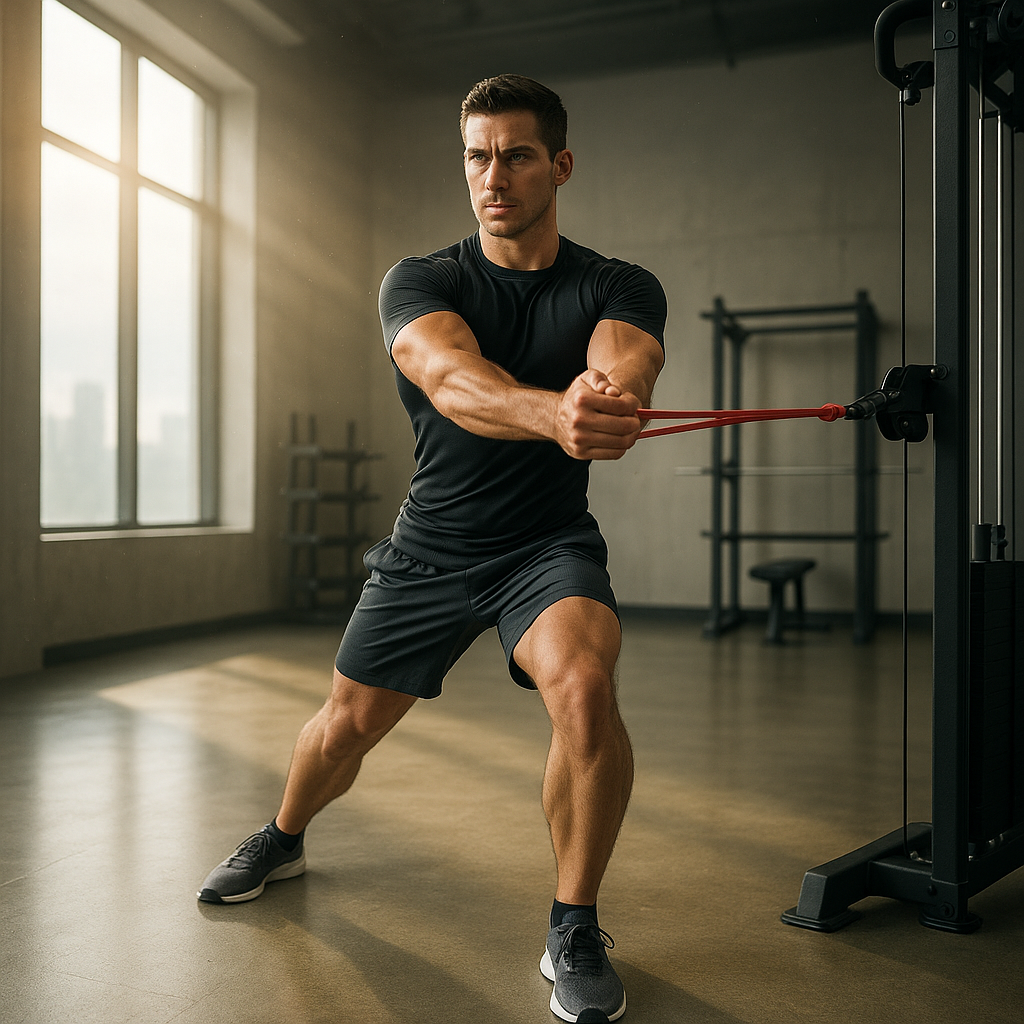
Perhaps the most popular anti-rotation exercise, the Pallof press uses a resistance band or cable machine to challenge your core to resist lateral twisting.
Starting position: Attach a resistance band at chest height. Stand perpendicular to the anchor, feet shoulder-width apart.
Hold the band with both hands close to your chest.
Extend your arms straight out in front of you, resisting the band's pull.
Hold for a few seconds, then return to the starting position.
Repeat 8-12 times per side.
Anti-Rotation Plank
A twist on the classic plank that intensifies core stability and resistance to lateral rotation.
Start in a forearm plank position.
Shift your weight slightly to one side, lifting the opposite arm or leg to challenge your core's anti-rotational strength.
Hold for 20-30 seconds, then switch sides.
Landmine Anti-Rotation Press
Using a landmine setup (a barbell anchored at one end), this exercise requires you to resist rotation while pressing the bar away from your body.
Stand with feet shoulder-width apart, holding the barbell close to your chest.
Press the bar forward and away, keeping your torso stable and resisting rotation.
Return slowly and repeat.
Suitcase Carry
This functional anti-rotation exercise involves walking while holding a weight on one side of the body.
Hold a dumbbell or kettlebell in one hand.
Keep your torso upright and resist leaning or rotating toward the weighted side.
Walk for 20-30 metres, then switch sides.
Benefits of Anti-Rotation Exercises
Adding anti-rotational core exercises to your routine offers numerous benefits beyond just a strong ab:
Improved core stability: Your entire core works as a unit to resist twisting, creating better balance and posture.
Enhanced functional movement: Everyday actions like lifting, carrying, or turning become easier and safer.
Lower back health: Strengthening the core muscles reduces strain on the lower back, helping to prevent pain.
Better athletic performance: Whether running, squatting, or jumping, a stable core improves force transfer and power.
How to Incorporate Anti-Rotation Exercises into Your Training Program
To get the most out of your anti-rotation core training, consider these tips:
Start with basics: Begin with simpler exercises like the Pallof press or anti-rotation plank before progressing to weighted movements.
Prioritise quality over quantity: Focus on controlled, deliberate movements to effectively engage the core muscles.
Integrate with other core exercises: Combine anti-rotational exercises with rotational core exercises and traditional ab work for a balanced programme.
Use appropriate resistance: Bands, cables, or weights should challenge you but not compromise form.
Consistency is key: Aim to include core stability work 2-3 times a week.
Practical Tips for Effective Core Stability Training
Maintain a neutral spine: Avoid excessive flexion or extension during exercises to protect your lower back.
Engage your glutes: Activating your glutes supports the pelvis and enhances torso stability.
Breathe properly: Don't hold your breath; use steady breathing to maintain tension in your core muscles.
Focus on the entire core: Remember, the core includes more than just the abdominals — obliques, lower back, and hips all play a role.
Anti-Rotation Exercises for Parents on the Go
For those juggling an active family life, anti-rotational core training can be sneaked into your day:
Use resistance bands while watching the kids or waiting in queues.
Try suitcase carries with shopping bags.
Incorporate anti-rotation planks during short workout breaks.
These small efforts add up to improved core strength and better resistance to injury.
Combining Anti-Rotation with Rotational Core Exercises
While anti-rotation exercises focus on resisting movement, rotational core exercises train your muscles to control and produce rotation. Both are important for a balanced core training programme.
Examples of Rotational Core Exercises
Russian twists
Cable woodchoppers
Medicine ball throws
Including rotational exercises alongside anti-rotational ones ensures your core is versatile, strong, and well-prepared for all planes of motion.
Common Mistakes to Avoid in Anti-Rotational Core Training
Allowing the torso to rotate: The key is to resist rotation, so keep your torso locked in place.
Using too much weight too soon: This can compromise form and increase injury risk.
Neglecting other muscle groups: Don't ignore glutes and lower back muscles, which are vital for core stability.
Holding breath: Maintain steady breathing to keep core muscles engaged effectively.
Sample Anti-Rotation Core Training Workout
Try this beginner-friendly circuit 2-3 times per week:
Pallof Press – 3 sets of 10 reps each side
Anti-Rotation Plank – 3 sets of 20 seconds each side
Suitcase Carry – 3 sets of 20 metres each side
Bird Dog (to enhance glute and lower back engagement) – 3 sets of 10 reps each side
Rest 30 seconds between exercises. Gradually increase resistance and duration as you get stronger.
Conclusion
Anti-rotation exercises are a powerful yet often underappreciated component of core training. By focusing on resisting unwanted rotation, these anti-rotational core exercises strengthen the entire core complex, protect the spine, and enhance functional movement. Whether you're looking to improve your athletic performance, prevent injury, or move more comfortably in daily life, incorporating anti-rotation core training into your programme is a wise choice.
Remember to start with foundational exercises like the Pallof press and anti-rotation plank, progress carefully, and combine these with rotational core exercises for a balanced, strong core. With consistency and attention to technique, you'll notice improved stability, better posture, and a more resilient torso ready to take on whatever life throws your way.
Frequently Asked Questions
Q1: How is anti-rotation different from regular core exercises?
A: Anti-rotation exercises specifically train your core muscles to resist twisting forces, whereas regular core exercises may focus on flexion (like crunches) or rotation (like Russian twists). Anti-rotation is about stability rather than movement.
Q2: Can anti-rotation exercises help with lower back pain?
A: Yes, strengthening the core muscles through anti-rotational training supports the spine and pelvis, which can reduce strain and help alleviate lower back discomfort.
Q3: Do I need special equipment for anti-rotation core training?
A: Not necessarily. Resistance bands and bodyweight exercises, such as anti-rotation planks, are highly effective in strengthening the core. However, using cables, landmines, or dumbbells can add variety and challenge.
Q4: How often should I do anti-rotation exercises?
A: Including them 2-3 times per week as part of your core training programme is ideal for building strength and stability.
Q5: Can anti-rotation training improve my performance in sports?
A: Absolutely. A strong, stable core improves your ability to transfer power, maintain balance, and reduce injury risk in sports involving running, jumping, or sudden changes of direction.
Q6: Are anti-rotation exercises suitable for beginners?
A: Yes. Starting with bodyweight or band-based exercises, such as the Pallof press, is an excellent way for beginners to develop core strength safely and effectively.
Q7: Should I combine anti-rotation exercises with rotational core exercises?
A: Yes, a balance of both is essential. Anti-rotation strengthens stability, while rotational exercises train your core to control and produce twisting movements.
Q8: Can I do anti-rotation exercises at home?
A: Definitely. Many anti-rotational exercises require minimal equipment and can be done in small spaces, making them perfect for home workouts.