
Improve Foot Strength: Exercise & Strengthening for Athletes
Introduction: Why Foot Strength Matters for Athletes
The human foot is a remarkable structure, often underestimated in its role during athletic performance. Packed with intrinsic and extrinsic foot muscles, it forms the foundation for movement, balance, and force transmission. Whether you're a runner, footballer, or a restless parent juggling daily activities, improving foot strength can significantly enhance foot function and reduce injury risk.
In this article, we'll explore effective foot strengthening exercises, the role of intrinsic foot muscles, and how a systematic approach to muscle training within the foot and ankle can improve force production and overall athletic performance.
Understanding the Muscles of the Foot: Intrinsic and Extrinsic
Before diving into exercises, it's essential to understand the difference between intrinsic and extrinsic foot muscles. The intrinsic muscles are located entirely within the foot, supporting the foot arch and controlling toe movements. These include the plantar intrinsic muscles, which play a crucial role in stabilising the foot during dynamic activities.
Extrinsic foot muscles, on the other hand, originate in the lower leg and insert into the foot, controlling larger movements such as ankle dorsiflexion and plantarflexion. Both groups are vital for foot strength and function.
The Role of the Intrinsic Foot Muscle
The intrinsic muscles form the foot core, much like the core muscles of your torso. Strengthening these muscles improves the foot arch's stability and enhances the foot's capacity to absorb and transmit force effectively. This is particularly important in sports requiring quick changes of direction or sustained impact.
A randomised controlled trial published in recent years highlighted that targeted foot muscle training can improve toe flexor strength and reduce symptoms of plantar fasciitis, a common overuse injury affecting the plantar fascia.
Why Improve Foot Strength?
Improving foot muscle strength has several benefits:
Enhances balance and proprioception
Supports efficient force production and transmission during movement
Reduces the risk of foot and ankle injuries
Improves overall foot function and endurance
For athletes, this translates into better performance, quicker recovery, and fewer setbacks.
Foot Strengthening Exercises: Building a Strong Foundation
A well-rounded strengthening programme should address both the intrinsic and extrinsic muscles. Below are some of the most effective foot exercises to incorporate into your training.
Short Foot Exercise: Activating the Foot Core
The short foot exercise is designed to engage the intrinsic muscles, particularly those that support the foot arch.
How to perform:
Sit or stand barefoot.
Attempt to shorten your foot by pulling the ball of your foot towards your heel without curling your toes.
Hold the contraction for 5-10 seconds.
Repeat 10-15 times.
This exercise promotes muscle activation within the foot, improving foot arch stability and force transmission.
Toe Flexor Strengthening
Strong toe flexor muscles contribute to better push-off during running and jumping.
Exercises to try:
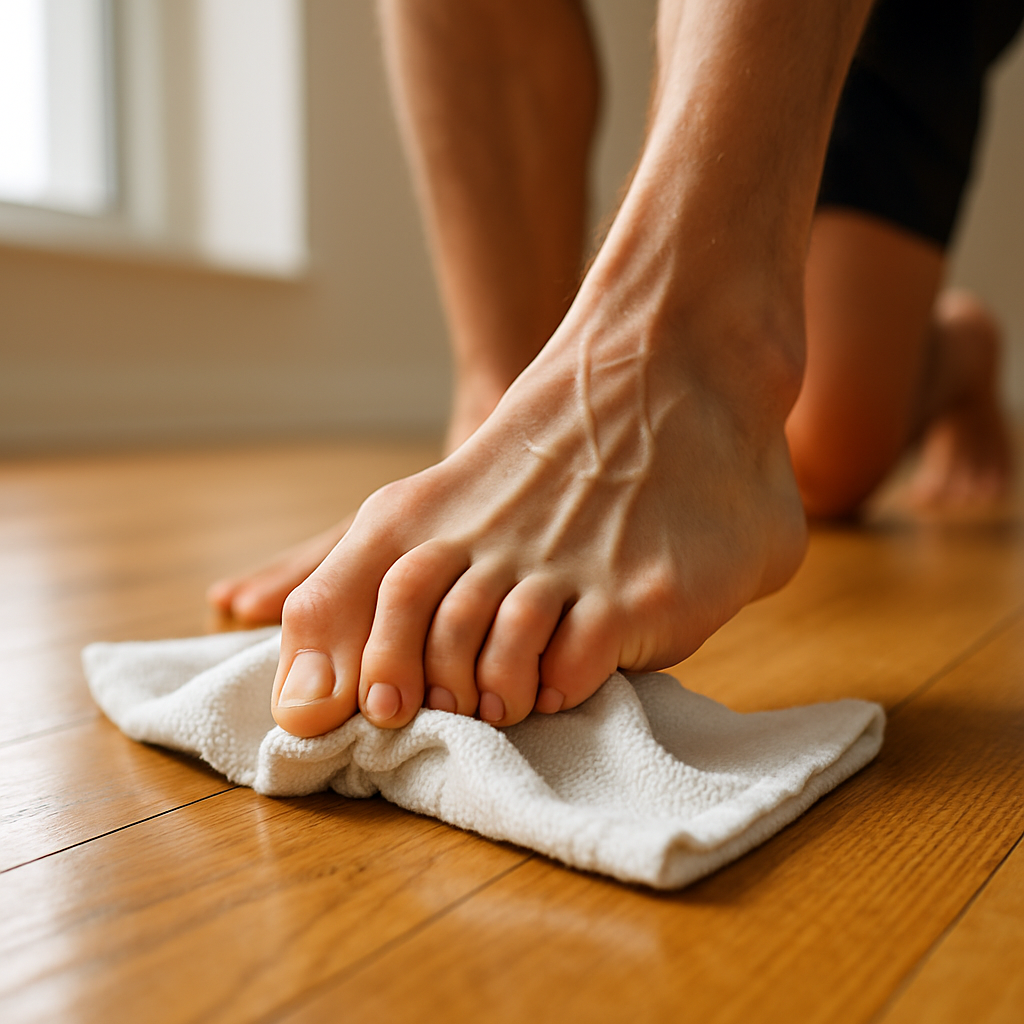
Towel Scrunches: Place a towel flat on the floor, and use your toes to scrunch it towards you. Perform 2-3 sets of 10-15 repetitions.
Marble Pickups: Use your toes to pick up marbles or small objects and place them in a container. Aim for 2 sets of 20 pickups.
Ankle Dorsiflexion and Plantarflexion Exercises
While focusing on foot muscles, don't neglect the ankle joint. Improving ankle dorsiflexion and plantarflexion enhances overall foot and ankle function.
Examples:
Resistance Band Dorsiflexion: Secure a resistance band around your foot and pull your toes towards you against resistance—3 sets of 15 reps.
Calf Raises: Stand on the edge of a step and raise your heels slowly, then lower them below step level. 3 sets of 15-20 reps.
Balance and Proprioception Drills
Training muscle activation within the foot supports better balance.
Single-leg Stance: Stand on one foot for 30 seconds, gradually increasing to 1 minute. Add movement or close your eyes for added challenge.
Wobble Board Exercises: Use a wobble or balance board to engage intrinsic muscles dynamically.
Designing a Foot Strengthening Program
To systematically improve foot strength, it's helpful to follow a structured programme based on evidence from systematic reviews and randomised controlled trials.
Key Principles:
Consistency: Aim for foot muscle training 3-4 times per week.
Progressive Overload: Gradually increase resistance or complexity.
Variety: Combine exercises that target intrinsic and extrinsic muscles.
Functional Movements: Include dynamic exercises that mimic sport-specific activities.
Sample Weekly Programme
Day Focus Exercises
Mon Intrinsic Muscle Activation Short Foot Exercise, Towel Scrunches
Wed Extrinsic Muscle Strengthening Resistance Band Dorsiflexion, Calf Raises
Fri Balance and Proprioception Single-leg Stance, Wobble Board
Sun Combined Functional Training Short Foot with Balance, Toe Flexor Strengthening
Addressing Common Foot Issues Through Strengthening
Plantar Fasciitis
Plantar fasciitis is a painful inflammation of the plantar fascia, often caused by overuse and weak foot muscles. Strengthening intrinsic muscles and improving toe flexor strength can relieve stress on the plantar fascia and promote healing.
Flat Feet and Collapsed Foot Arch
A weak foot arch can lead to poor force production and altered gait mechanics. Short foot exercises and foot muscles training help improve foot arch height and function, supporting better force transmission from the foot upwards.
Ankle Instability
Foot and ankle strength training enhances ankle dorsiflexion and overall stability, reducing the risk of sprains and other injuries.
The Science Behind Foot Muscle Training
Recent systematic reviews have confirmed the positive effects of targeted foot strengthening exercises on foot function and muscle activation. For example, research shows that muscle training within the foot improves not only muscle strength but also neuromuscular control, essential for injury prevention.
Randomised controlled trials demonstrate that programmes focusing on intrinsic muscle activation can increase toe flexor strength and enhance the foot core's ability to support dynamic movements.
Practical Tips for Daily Foot Strengthening
Go Barefoot When Safe: Walking barefoot activates intrinsic foot muscles more than wearing supportive shoes.
Incorporate Foot Exercises into Warm-ups: Spending 5-10 minutes on foot exercises before training can prepare the muscles for activity.
Use Minimalist Footwear Occasionally: This encourages natural foot movement and muscle engagement.
Stretch and Mobilise: Combine strengthening with ankle dorsiflexion stretches to maintain mobility.
Conclusion
Improving foot strength is a game-changer for athletes and active individuals alike. By focusing on both intrinsic and extrinsic foot muscles through a variety of foot strengthening exercises, you enhance foot function, balance, and force production. A systematic and consistent approach to muscle training within the foot and ankle can reduce injury risk and improve athletic performance.
Remember, the foot is your base—investing time in its strength pays dividends across all your physical pursuits.
Frequently Asked Questions
Q1: How long does it take to see improvements in foot strength?
A: With consistent training, noticeable improvements in foot muscle strength and function can appear within 4 to 6 weeks.
Q2: Can foot strengthening exercises help with plantar fasciitis?
A: Yes, strengthening the intrinsic foot muscles and improving toe flexor strength can alleviate stress on the plantar fascia and support recovery.
Q3: Should I do foot exercises barefoot or with shoes on?
A: Performing exercises barefoot is generally recommended to maximise intrinsic muscle activation, but ensure the surface is safe.
Q4: How often should I perform foot strengthening exercises?
A: Aim for 3 to 4 sessions per week, allowing recovery time while maintaining consistency.
Q5: Are balance exercises important for foot strength?
A: Absolutely. Balance and proprioception drills enhance muscle activation within the foot and improve overall stability.
Q6: Can strengthening foot muscles prevent ankle injuries?
A: Strengthening both foot and ankle muscles improves joint stability and reduces the likelihood of sprains.
Q7: Is the short foot exercise suitable for beginners?
A: Yes, it's a gentle yet effective exercise ideal for activating intrinsic foot muscles, suitable for all fitness levels.
Q8: Can foot muscle training improve performance in running?
A: Improved foot strength enhances force production and transmission, which can contribute to more efficient running mechanics.