Flywheel Training: Eccentric Resistance for Eccentric Strength
Introduction to Flywheel Training and Eccentric Resistance
For those seeking a fresh approach to resistance training, flywheel training provides an innovative and effective method that surpasses traditional weight training. Rooted in the principles of eccentric overload, this training method utilises the flywheel to provide variable resistance that adapts to your effort, unlocking new potential in strength development and athletic performance.
If you’re an active adult or a restless parent juggling daily life and fitness goals, this kind of training could be a game-changer. It’s versatile, efficient, and beneficial for targeting both the concentric and eccentric phases of muscle contractions.
Behind Flywheel: What is Flywheel Training?
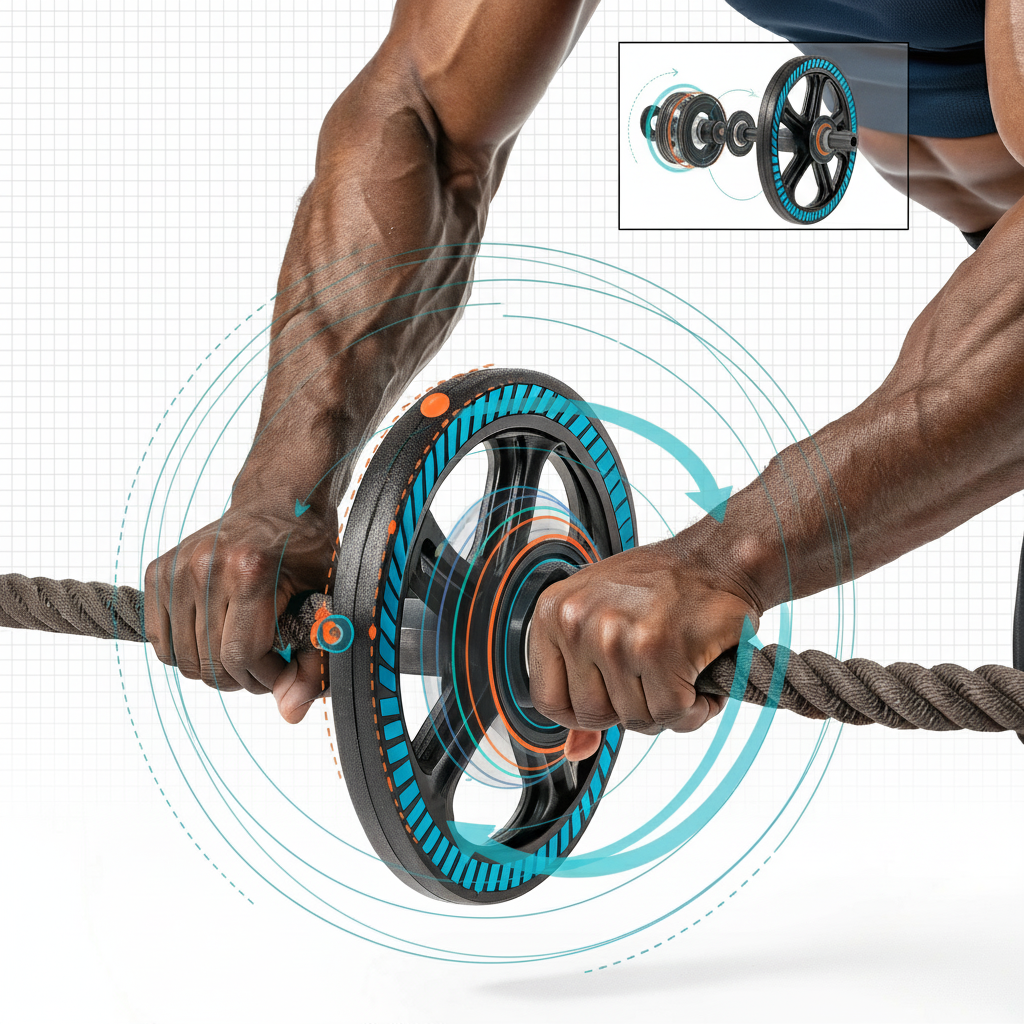
Flywheel training involves the use of a rotating disc or wheel that creates inertia. Unlike traditional weight training, where the resistance is constant (such as lifting a dumbbell or barbell), the resistance in flywheel training varies according to your own force and power output.
How Does the Flywheel Work?
During the concentric phase (when your muscles shorten as you exert force), you spin the flywheel, storing kinetic energy.
Then, in the eccentric phase (when your muscles lengthen), the flywheel resists your movement as it slows down, forcing you to control the deceleration.
This process creates what’s known as eccentric overload — a situation where the eccentric contraction is more demanding than the concentric one, which is difficult to replicate with traditional weights.
The Science of Eccentric Training and Its Benefits
Eccentric training focuses on the muscle lengthening under tension, which is crucial for building strength, power, and muscle size (hypertrophy). The eccentric phase typically causes more muscle damage, leading to greater adaptations.
Why Eccentric Resistance Matters
Increased strength gains: Muscles can handle more load eccentrically, so training this phase can lead to superior strength improvements.
Enhanced muscle hypertrophy: Eccentric overload stimulates muscle growth more effectively.
Injury prevention and rehabilitation: Controlled eccentric training improves tendon health and aids recovery from injuries.
Flywheel training is efficient because it allows you to apply and control eccentric resistance with precision, making it a valuable tool for both performance enhancement and rehabilitation.
Flywheel Training Equipment: Exploring the KBox and Beyond
One of the most popular devices for flywheel training is the KBox, developed by Exxentric, a pioneer in this field. The KBox incorporates a flywheel attached to a shaft with a strap or handle, enabling exercises that mimic natural movement patterns.
Key Features of Flywheel Training Equipment
Variable resistance: The harder you pull or push, the more resistance the flywheel provides.
Portable and compact: Devices like the KBox are relatively small, fitting well into home gyms or small fitness spaces.
Versatile range of motion: You can perform a variety of exercises targeting multiple muscle groups.
Other flywheel training machines exist, but the KBox is a standout for its balance of usability and functionality.
Comparing Flywheel Training with Traditional Weights
While traditional weight training remains effective and widely used, flywheel training offers some unique advantages:
Aspect Traditional Weight Training Flywheel Training
Resistance Type Constant (gravity-dependent) Variable, inertia-based
Eccentric Overload Difficult to control, specifically Easily achieved and controlled
Equipment Size Often bulky (bars, plates, machines) Compact and portable
Range of Motion Limited by equipment design Natural, adaptable to movement
Injury Risk Higher with heavy loads and poor form Lower due to controlled resistance
That said, the two can complement each other well in a comprehensive training programme.
How Flywheel Training Works: Muscle Contractions in Action
Understanding muscle contractions helps appreciate why flywheel training is so practical. There are two primary types involved:
Concentric contraction: Muscle shortens while generating force (e.g., lifting phase of a bicep curl).
Eccentric contraction: Muscle lengthens while under tension (e.g., lowering the weight in a bicep curl).
Flywheel training emphasises both phases but particularly the eccentric phase by providing resistance during muscle lengthening, which is often undertrained in conventional routines.
Benefits of Flywheel Training for Active Adults and Restless Parents
For those balancing busy lives, flywheel training can be an efficient and rewarding way to stay strong and healthy.
Practical Benefits Include:
Time-efficient workouts: High intensity with fewer sets can yield great results.
Full-body engagement: Exercises can target various muscle groups simultaneously.
Improved control and coordination: The eccentric phase enhances neuromuscular control.
Reduced joint stress: Variable resistance adapts to your force, lowering injury risk.
Incorporating Flywheel Training into Your Routine
If you’re new to flywheel training, here are some tips to get started:
Start light: Focus on mastering technique and control during the eccentric phase.
Incorporate compound movements: Squats, deadlifts, and rows work multiple muscle groups effectively.
Listen to your body: Eccentric overload is demanding; adequate recovery is key.
Mix with traditional weights: Use flywheel sessions alongside conventional resistance training for balanced development.
Flywheel Training for Rehabilitation and Injury Prevention
The controlled eccentric overload provided by flywheel devices is ideal for rehabilitation purposes. It helps:
Restore strength safely after injury.
Improve tendon resilience.
Accelerate recovery time.
Physical therapists often use flywheel training to help clients regain function without overloading vulnerable tissues.
Unlocking Athletic Performance with Flywheel Training
Athletes benefit from flywheel training as it enhances:
Explosive power.
Muscle hypertrophy.
Change of direction and deceleration control.
Because the resistance adapts to effort, it challenges muscles in a way that mimics sport-specific demands more closely than many traditional exercises.
Practical Exercises Using Flywheel Training Equipment
Here are some popular exercises to try:
Flywheel Squat: Builds lower body strength and power.
Flywheel Romanian Deadlift: Targets hamstrings and glutes with eccentric emphasis.
Flywheel Row: Strengthens back muscles and improves posture.
Flywheel Chest Press: Enhances upper body strength.
Aim for controlled movements, especially during the eccentric phase, to maximise benefits.
Tips for Maximising Flywheel Training Benefits
Warm up properly to prepare muscles for eccentric loading.
Focus on smooth, controlled eccentric phases.
Progressively increase effort to drive adaptation.
Maintain consistent training frequency (2-3 sessions per week).
Combine with mobility work to preserve the range of motion.
Conclusion
Flywheel training offers a unique and effective way to incorporate eccentric overload into your resistance training routine. By harnessing the inertia of a flywheel, this method provides variable resistance that challenges both the concentric and eccentric phases of muscle contractions, resulting in enhanced strength, hypertrophy, and increased injury resilience. Whether you are an active adult seeking efficient workouts or a restless parent looking to maximise limited gym time, flywheel training can unlock new potential in your fitness journey. Combining it with traditional weights and innovative programming can provide balanced, long-term results.
Frequently Asked Questions
Q1: Is flywheel training suitable for beginners?
Yes, it can be adapted for all fitness levels. Beginners should start with lighter inertia and focus on mastering control during the eccentric phase.
Q2: How does flywheel training compare to traditional weight training for muscle growth?
Flywheel training emphasises eccentric overload, which can stimulate greater hypertrophy compared to traditional weights when programmed correctly.
Q3: Can flywheel training help with injury rehabilitation?
Absolutely. Its controlled eccentric resistance is excellent for safely rebuilding strength and improving tendon health.
Q4: Do I need special equipment for flywheel training?
Yes, devices like the KBox are explicitly designed for flywheel training. They are compact and portable, making them suitable for both home and gym use.
Q5: How often should I train with a flywheel?
Typically, 2-3 sessions per week are practical, allowing adequate recovery due to the demanding eccentric load.
Q6: Can flywheel training improve athletic performance?
Yes, it enhances power, control, and muscle strength, which are critical for many sports.
Q7: Is flywheel training safer than traditional weightlifting?
It can be safer due to variable resistance and controlled eccentric overload, reducing joint stress and injury risk when performed correctly.
Q8: What muscle groups can I target with flywheel training?
You can target almost all major muscle groups, including legs, back, chest, and core, depending on the exercises performed.